Docschargebeedocs

HomeBillingPaymentsRevRecGrowthReveal
Support

Product Updates


  • Release Notes

Getting Started


  • Overview
  • Chargebee Billing Data Centers
  • Object Relationship Model
  • Understanding Sites
  • Developer Resources
  • Chargebee Tech Glossary
  • Articles and FAQ

Implementing Chargebee


  • Implementation Guide
  • Go-live Checklist
  • Articles and FAQ

AI in Chargebee


  • Chargebee Agents
  • Chargebee Copilot
  • Chargebee MCP Server (Model context protocol)

Product Catalog


  • Product Catalog Overview
  • Coupons
  • Articles and FAQ

Subscriptions


  • Working with Subscriptions
  • Billing
  • Orders
  • Articles and FAQ

Customers


  • Managing Customers
  • Account Hierarchy
  • Email Notifications
  • Branding
  • Configure Multiple Languages
  • Articles and FAQ

Invoices, Credit Notes and Quotes


  • Invoices
  • Credit Notes
  • Quotes [Legacy]
  • Transactions
  • Articles and FAQ

Taxes


  • Overview
  • Configuring Taxes
  • Country-specific Taxes
  • Articles and FAQ

Hosted Capabilities


  • Overview
  • Hosted Checkout
  • Hosted Self-Serve Portal
  • Hosted Pages Features
  • Additional Hosted Pages
  • Payment Components
  • Managing payments with ChargebeeJS
  • Mobile-Optimized Hosted Pages
  • Articles and FAQ

Site Configuration


  • Users & Roles
  • Custom Fields & Metadata
  • Mandatory Fields
  • File Attachments & Comments
  • Advanced Filter Options
  • Multicurrency Pricing
  • Multi-decimal Support
  • Configuring Reason Codes
  • Events and Webhooks
  • API Keys
  • Time Zone
  • Time Machine
  • Transfer Configurations
  • Articles and FAQ

Reports and Analytics


  • RevenueStory
  • Home Dashboard
  • Frequently Asked Questions
  • FAQs for Classic Reports Sunset
  • Articles and FAQ

Integrations


  • Sales
  • Customer Support and Success
  • Finance
  • Tax
  • Marketing
  • Stitch
  • Collaboration
  • Contract Management
  • Order Management
  • Mobile Subscriptions (Legacy)
  • Other Integrations
  • Articles and FAQ

Data Privacy & Security


  • Two Factor Authentication
  • SAML Single Sign-On
  • System for Cross-Domain Identity Management (SCIM)
  • EU-GDPR
  • Consent Management
  • Personal Data Management
  • Compliance Certificates
  • HIPAA Guidelines
  • PCI Recommendations and Integration Types
  • Articles and FAQ

Data Operations


  • Bulk Operations
  • Migration
  • Articles and FAQ
  1. Billing
  2. Integrations
  3. Articles and FAQ
  4. Quickbooks
  1. Billing
  2. Integrations
  3. Articles and FAQ
  4. Quickbooks

Where is the Account Name field in Latest Product Catalog

Scope

Where is the Account Name field in Latest Product Catalog

Summary

The Accounting Information option has to be enabled from Billing LogIQ to display under plan level.
image

Solution

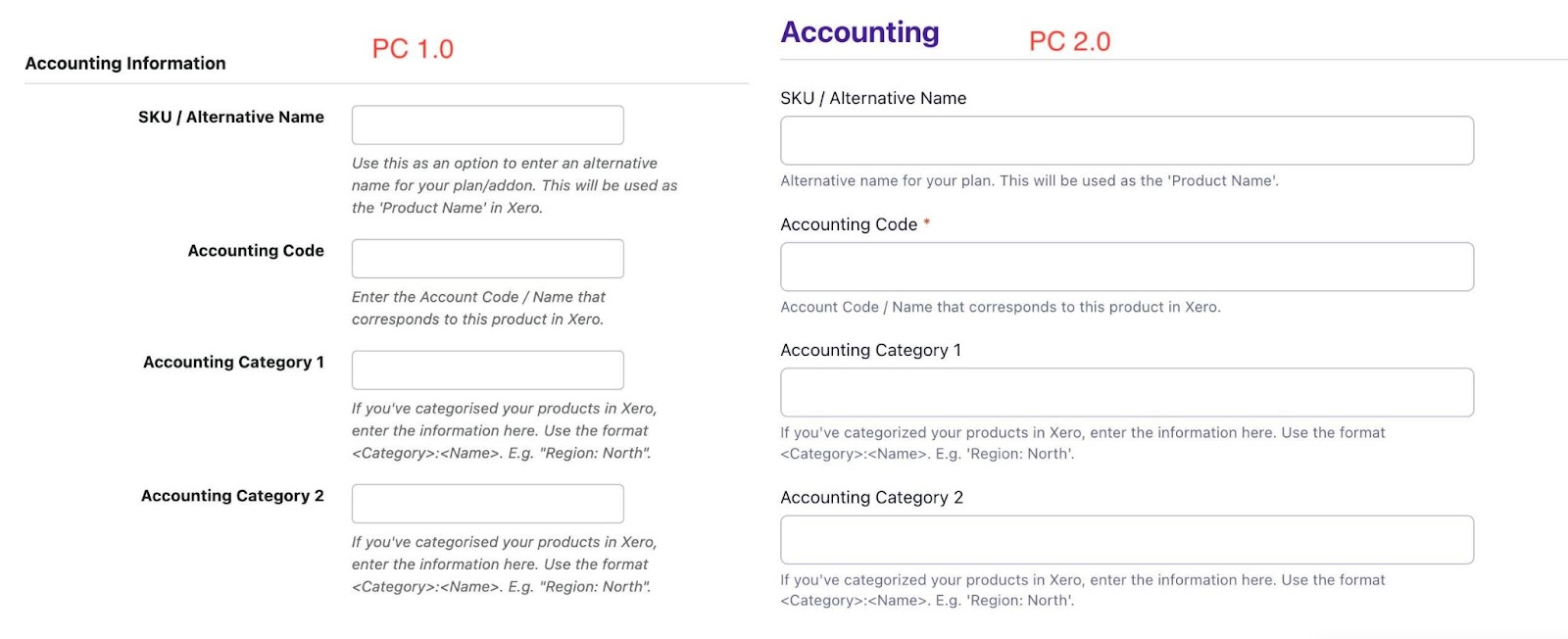
The Accounting Information section helps Chargebee sync up with any accounting applications that you integrate with, like Xero and QuickBooks. Each of the accounting fields captures information that helps track product-specific sales/revenue from an accounting perspective. This option has to be enabled from Billing LogIQ to display under plan level.

  • SKU: Store Keeping Unit or SKU is a name used to identify a product/service in inventory management or accounting systems. You can use this as an alternative name for your plan and it will be used as the Product Name in the accounting system.

  • Accounting code: This field captures your Accounting systems' General Ledger Account code/name. When product information is synced to the Accounting system, the product-specific information will be synced with this account as captured here. This is a mandatory field. You cannot proceed with accounting integration if this field is left blank.

  • Accounting category: The Accounting Category captures product-specific additional metadata or categorization for reporting purposes in the accounting systems (such as regions you are selling to or branches you are selling from). It should be entered in a specific format. E.g. 'Region: Northern'

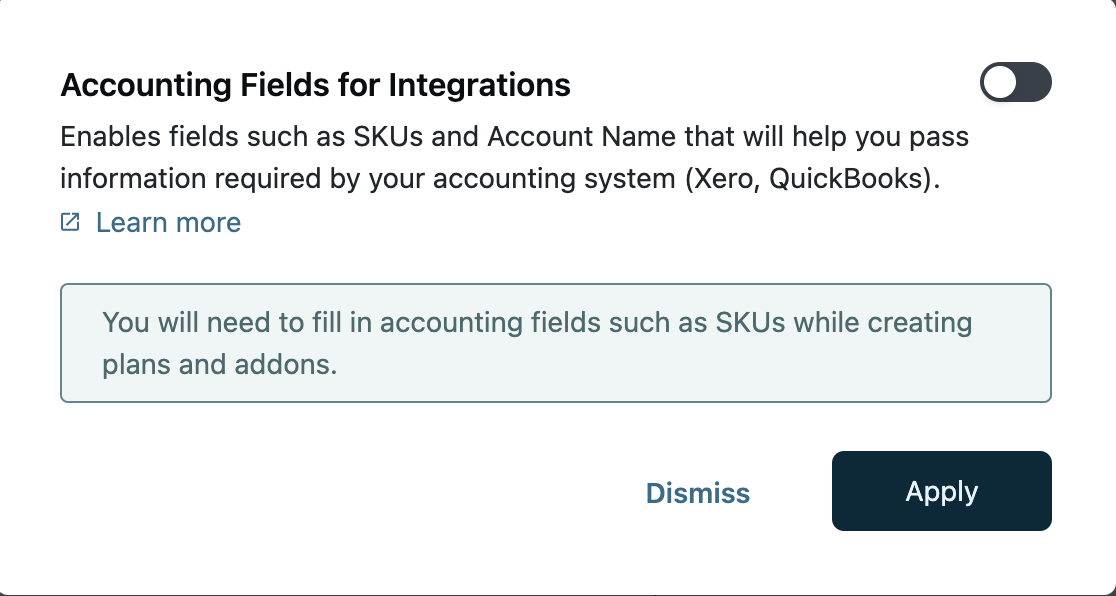
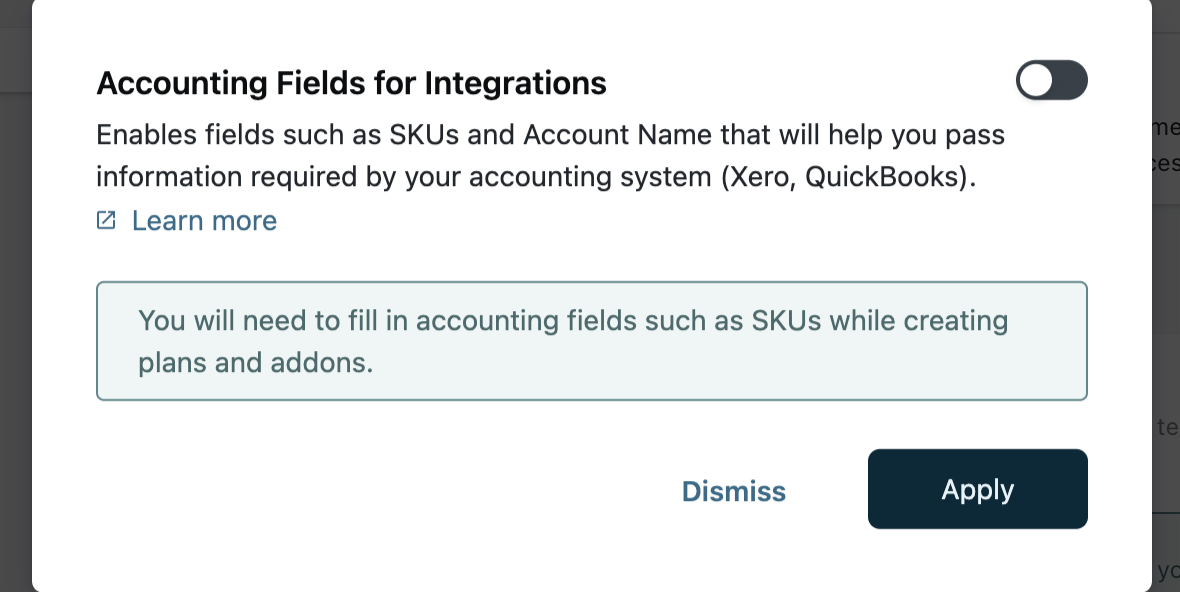
This option is disabled by default. You need to enable this from Settings > Configure Chargebee > Billing LogIQ > Enable Accounting Fields for integration
image
image

This field captures your Accounting systems' General Ledger Account code/name. When product information is synced to the Accounting system, the product-specific information will be synced with this account as captured here. This is a mandatory field. You cannot proceed with accounting integration if this field is left blank.

Click here to know about various accounting systems integrations available in Chargebee.

If you are using QuickBooks - you can enter one category (referred to as Classes/sub-classes)

If you are using Xero - you can enter two categories, Accounting Category_1, Accounting Category_2 (referred to as Tracking categories).

For information regarding these fields in API, refer to the plans section in the API documentation.

Related Documentation:

  • Plan Configuration on Latest Product Catalog

Was this article helpful?