Net D
Net Days or Net-D is a payment term that refers to the period within which a customer must pay their outstanding invoice (net amount) for the service or product received.
Net D terms specify that the seller expects to receive payment within a set number of days after the service is activated or the product is shipped.
In Chargebee, Net-D can be set anywhere from Net 1 to Net 180. There are default values available, and you can add more values within that range. You can also set specific Net D values for each customer in Chargebee.
Example
If the payment term specified for a customer or an invoice is Net 30, the total invoice amount must be paid within 30 days.
The following diagram shows the Invoice Status Life Cycle:
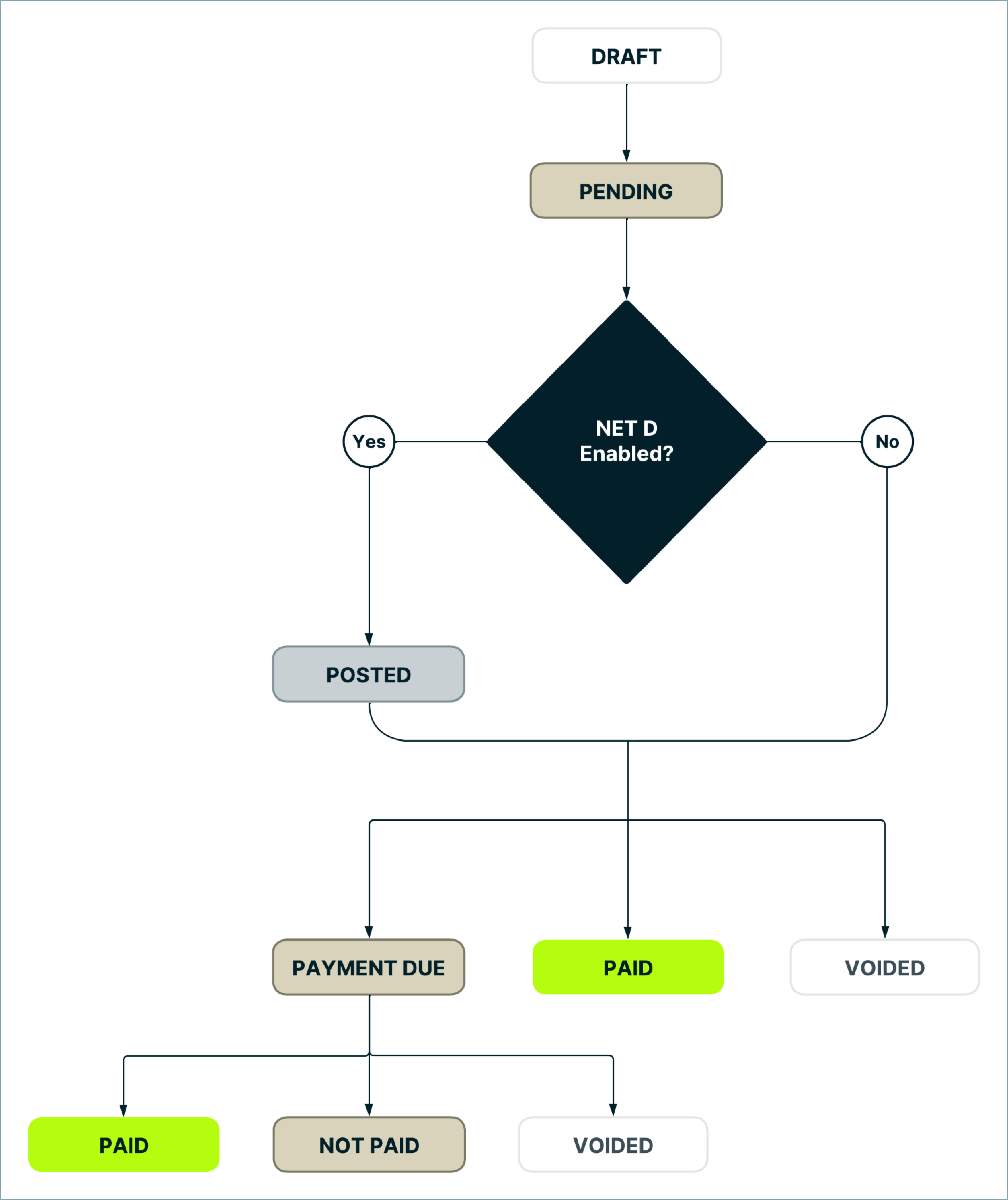
For example, if you set Net 15 for your payment term, when an invoice is generated, Chargebee checks whether Net-D is enabled for your site. With Net-D enabled, the invoice moves to Posted status. The customer can make payment within the defined term, which in this case is 15 days. If payment is made within 15 days, the invoice status updates to Paid. If the customer does not pay within 15 days, the status will be Payment Due or Void, depending on the payment.
Note
Enable Net-D for Chargebee Invoices
To include Net-D as a payment term in your invoices, follow these steps:
-
Click Settings > Configure Chargebee > Billing LogIQ > Payment Terms and click Enable Payment Terms.
-
Select to enable Net-D for Offline payment method and Online payment method as required. Once enabled, you cannot disable Net-D for the selected payment methods.

-
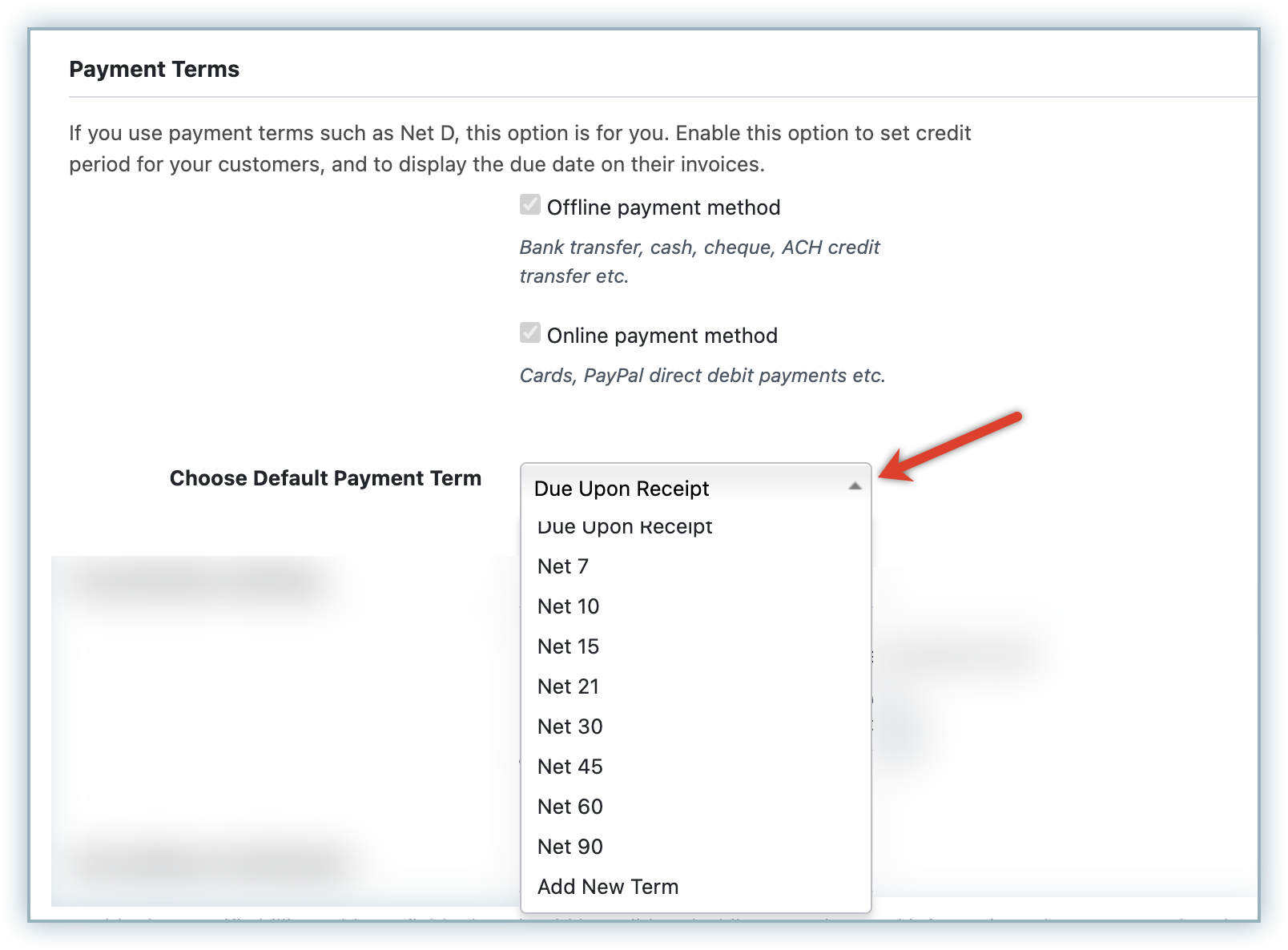
Set a default payment term for the site using Choose Default Payment Term.
-
The options are as shown in the screenshot above:
- Due Upon Receipt: Select this option to not use any specific payment terms.
- Net 7 to Net 90: These are the payment terms available out of the box in Chargebee.
- Add New Term: This allows you to add a custom Net-D term to the list of available options.
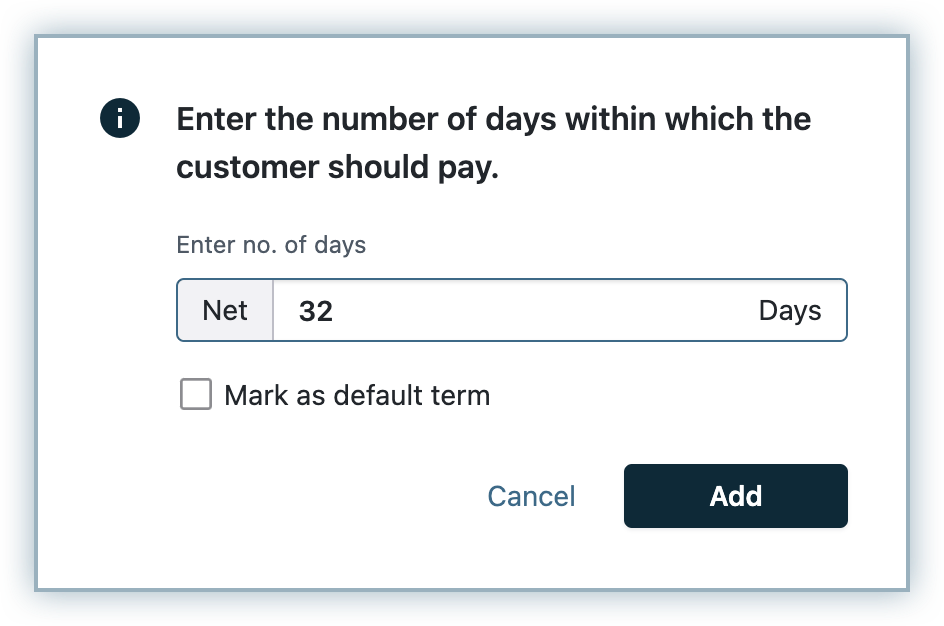
- This new term can range from 1 to 180 days.
- Use the Mark as default term option to set it as the site default. Note that this does not change the Net-D setting already applied to your existing customers.
-
Click Update Billing LogIQ.
After Net-D is enabled, the payment term chosen is applied to all new customer records created from that point forward, depending on the payment method for which Net-D is configured.
Enable Payment Terms for a specific customer
Apart from configuring payment terms at a site-level in your Chargebee site, here are two ways in which you can set payment terms for specific customer records:
Via Web Interface
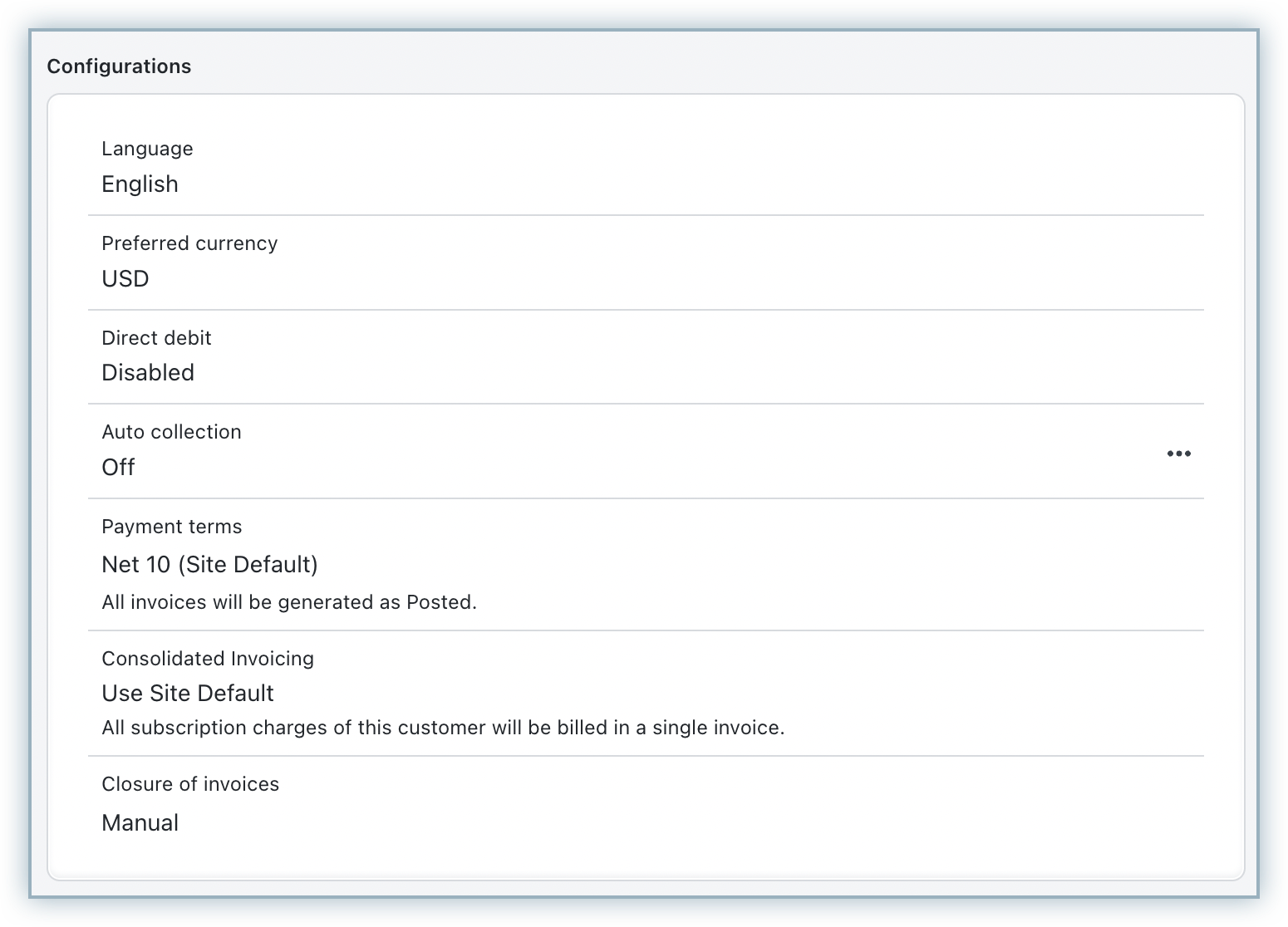
The Payment Term set under Billing LogIQ is applied to all customers who are paying via offline and/or online mode, based on your configuration. (That is, customers for whom Auto Collection is turned OFF and/or ON).
You can modify the payment term for a specific customer from the customer details page as shown below:
Via API
The net_term_days attribute of the customer resource holds the Net-D value for the customer. This can be set using the Create a customer or Update a customer endpoints.
Payment Terms in Invoice
Once Payment Terms is enabled, invoices get created in Posted status for Active subscriptions.
The invoice also displays the payment term (Net 15 or Net 30 days) and the due date for the payment, which is the date the invoice is generated plus the number of days set as payment terms.
To display the Payment Term and Due Date in the Invoice PDF, enable the Payment Terms & Due Date (Invoice Only) option under Settings > Configure Chargebee > Invoices & Credit Notes.
[screenshot images/net_d/netd3.png " " "]
Changing Payment Terms
Site-Level Change
You can change Net-D at the site level the same way you enable it. However, this does not affect existing customer records. Only new customer records created from then on will store the new setting.
Customer-Level Change
You can also update Net-D for a particular customer by navigating to the customer details page and using the Edit Customer link.
Once changed, the new setting only applies to invoices generated for the customer from that point forward; existing invoices are not affected.
Search for Posted Invoices
You can search for posted invoices using the Status = "Posted" filter in the Chargebee site and the API.
Email Notifications
Chargebee can send emails to your customers informing them that an invoice has been Posted and when it is due for payment. These emails can be sent based on the version of email notifications enabled for your Chargebee site.
You can configure the email notifications for Net-D by navigating to Settings > Configure Chargebee > Email Notifications > Invoices & Payments > Payment Terms (Net-D).
[screenshot images/net_d/email-v2.png " " "]
Toggling the switch enables the email notification for Net-D Payment Due Reminder.
Click here to learn more about configuring emails in Email Notifications V2.
Note
- An invoice-generated event is triggered when an invoice goes into Posted status.
- An invoice-updated event is triggered when the invoice status changes post the due period.
Was this article helpful?