New in Chargebee: Explore Reveal and understand your payment performance end-to-end.Try Now

Docschargebeedocs

HomeBillingPaymentsRevRecGrowthReveal
Support

Product Updates


  • Release Notes

Getting Started


  • Overview
  • Chargebee Billing Data Centers
  • Object Relationship Model
  • Understanding Sites
  • Chargebee Tech Glossary
  • Articles and FAQ

Implementing Chargebee


  • Implementation Guide
  • Go-live Checklist
  • Articles and FAQ

AI in Chargebee


  • Chargebee Agents
  • Chargebee Copilot
  • Chargebee MCP Server (Model Context Protocol)

Developer Resources


  • Developer Resources Overview
  • Articles and FAQ

Product Catalog


  • Product Catalog Overview
  • Coupons
  • Articles and FAQ

Subscriptions


  • Working with Subscriptions
  • Billing
  • Orders
  • Articles and FAQ

Customers


  • Managing Customers
  • Account Hierarchy
  • Email Notifications
  • Branding
  • Configure Multiple Languages
  • Articles and FAQ

Entitlements


  • Entitlements Overview
  • Features Overview
  • Feature Management
  • Managing Product Entitlements
  • Subscription Entitlements
  • Customer Entitlements
  • Grandfathering Entitlements
  • Articles and FAQ

Usage Based Billing


  • Understanding Usages
  • Setting up Usage Based Billing
  • Usage Alerts
  • Metered Billing
  • Articles and FAQ

Chargebee CPQ


  • Chargebee CPQ
  • Chargebee CPQ for Salesforce
  • Chargebee CPQ for HubSpot

Invoices, Credit Notes, and Quotes


  • Invoices
  • Credit Notes
  • Quotes [Legacy]
  • Transactions
  • Articles and FAQ

Taxes


  • Overview
  • Configuring Taxes
  • Country-specific Taxes
  • Articles and FAQ

Hosted Capabilities


  • Overview
  • Hosted Checkout
  • Hosted Self-Serve Portal
  • Hosted Pages Features
  • Additional Hosted Pages
  • Payment Components
  • Pricing Table
  • Managing Payments with Chargebee.js
  • Mobile-Optimized Hosted Pages
  • Articles and FAQ

Site Configuration


  • Users & Roles
  • Custom Fields & Metadata
  • Approvals
  • Mandatory Fields
  • File Attachments & Comments
  • Advanced Filter Options
  • Multicurrency Pricing
  • Multi-decimal Support
  • Configuring Reason Codes
  • Events and Webhooks
  • API Keys
  • Time Zone
  • Time Machine
  • Transfer Configurations
  • Articles and FAQ

Multi Business Entity


  • Multi Business Entity Overview
  • Customer Transfer Overview
  • Articles and FAQ

Mobile Subscriptions


  • Overview
  • Omnichannel Subscriptions
  • Omnichannel One-Time Orders
  • Mobile Subscriptions (Legacy)

Reports and Analytics


  • RevenueStory
  • Home Dashboard
  • Frequently Asked Questions
  • FAQs for Classic Reports Sunset
  • Articles and FAQ

Integrations


  • Sales
  • Customer Support and Success
  • Finance
  • Tax
  • Marketing
  • Stitch
  • Collaboration
  • Contract Management
  • Ecommerce Management
  • Articles and FAQ

Data Privacy & Security


  • Two Factor Authentication
  • SAML Single Sign-On
  • System for Cross-Domain Identity Management (SCIM)
  • EU-GDPR
  • Consent Management
  • Personal Data Management
  • Compliance Certificates
  • HIPAA Guidelines
  • PCI Recommendations and Integration Types
  • Articles and FAQ

Data Operations


  • Bulk Operations
  • Migration
  • Articles and FAQ
  1. Billing
  2. Invoices, Credit Notes, and Quotes
  3. Articles and FAQ
  4. Invoice Operations
  1. Billing
  2. Invoices, Credit Notes, and Quotes
  3. Articles and FAQ
  4. Invoice Operations

How do I refund the charge for the invoice that was deleted accidentally?

Problem Statement

You want to know how do I refund the charge for the invoice that was deleted accidentally.

Solution

Scope

How do I refund the charge for a deleted invoice?

Summary

Once the invoice is deleted, you can either process a refund from the Transaction page directly or Import the deleted invoice using API/Bulk Operation and process a refund.

Solution

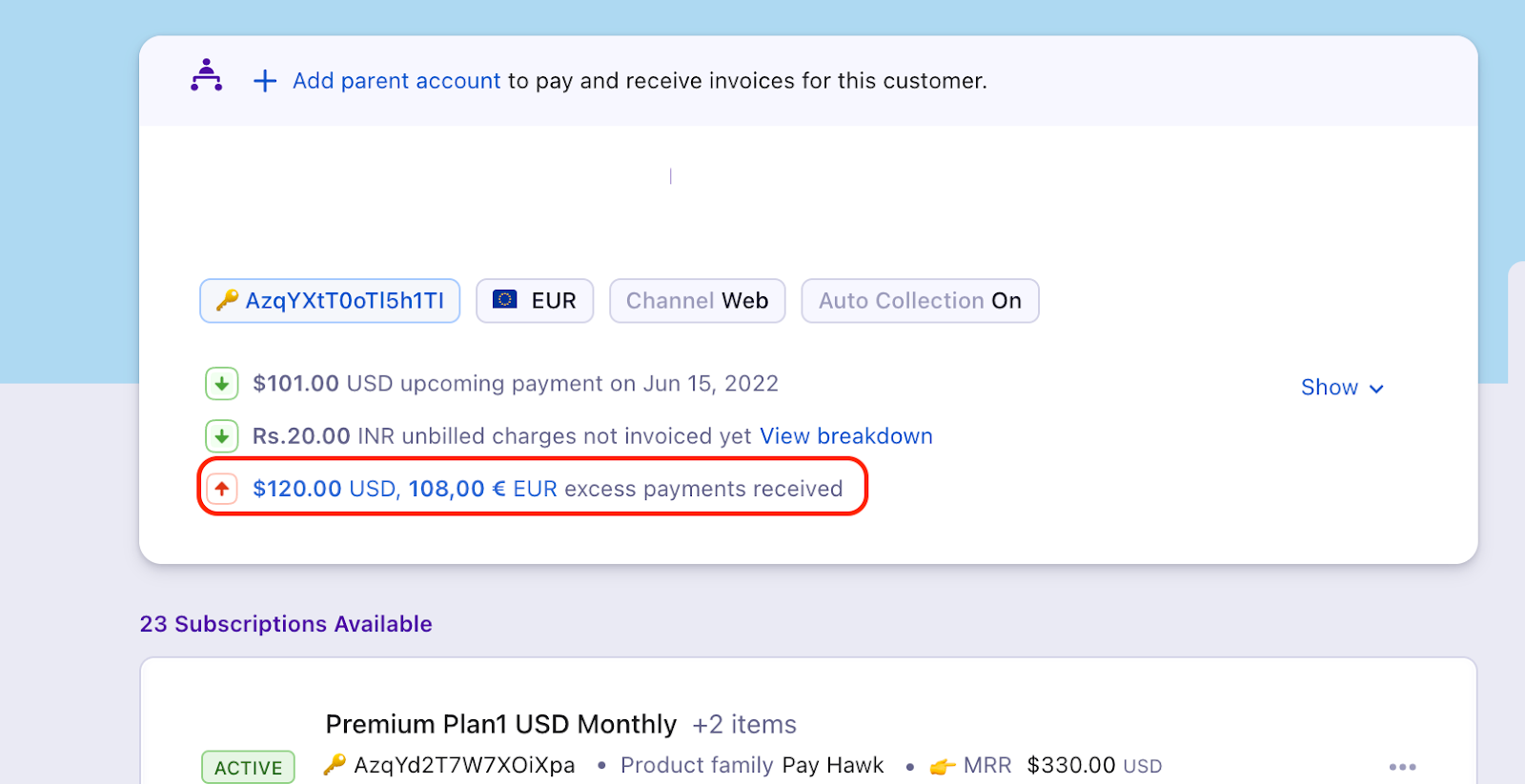
By default, you would not be able to delete a Paid invoice. In order to do that, you would have deleted the 'Payments' attached to the invoice. Once you have deleted the payments, the charge will be moved to the 'Excess Payments', and this will be visible under the Customer details page.
image

Note

Total Excess Payments for a specific customer We have updated our summary box to provide a more streamlined and elegant user experience. With this upgrade, hyperlinks have been added to the summary box, allowing users to easily access related information. The Total Excess Payments on Summary Section is available at the top of the Customer details page which provides a total amount due of a customer and hyperlink that directs to the details. Refer to this link for more details.

Follow the below steps to process a refund for Online and Offline payments.

There are two types of invoices.

  1. Current term

  2. Past term

Current term:

If it's deleting a current term invoice, you will have an option to 'Regenerate invoice'. Please refer to this link Regenerate Invoice for more details. Once you regenerate the invoice, the excess payments will be applied automatically. Then you can refund the invoice using the refund option.

Please refer to the video link for reference.

Past term:

There are three ways to process a refund for Past terms:

  1. From transaction page

  2. Import an invoice using API

  3. Import invoice using Bulk Operation

Note: You can process the refund directly from the transaction without creating an invoice. The only difference is refunding from the transaction will not create a refunded credit note but a transaction reference ID will be created. If you prefer to have a credit note as a reference, you need to import an invoice via API/Bulk Operation

  1. From the transaction page:

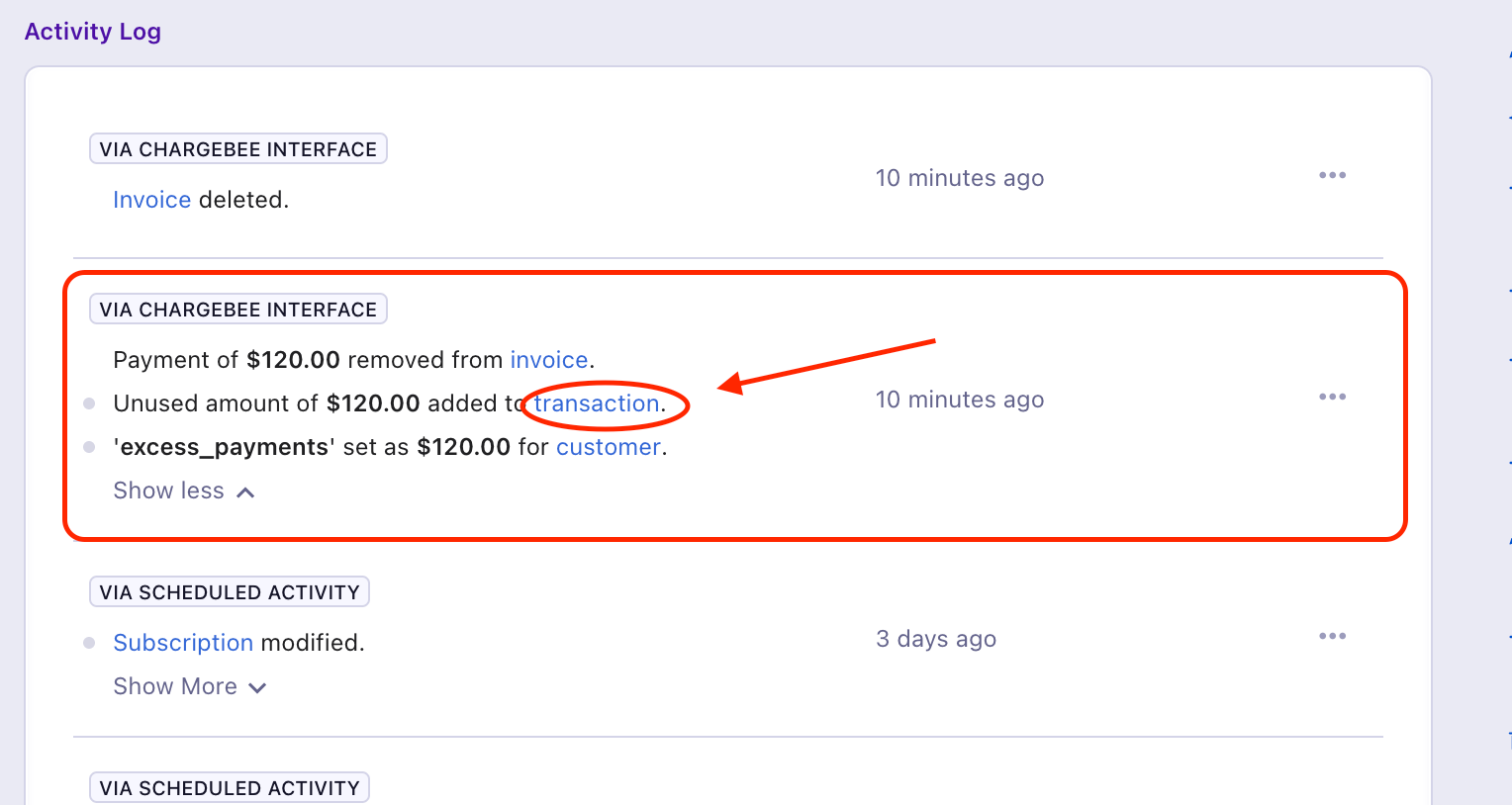
Navigate to the Subscription details page > Activity log and look for the payment deleted log (right below the invoice deleted log) and click on Show More. Now, you need to click on the transaction hyperlink highlighted in blue in color.
image

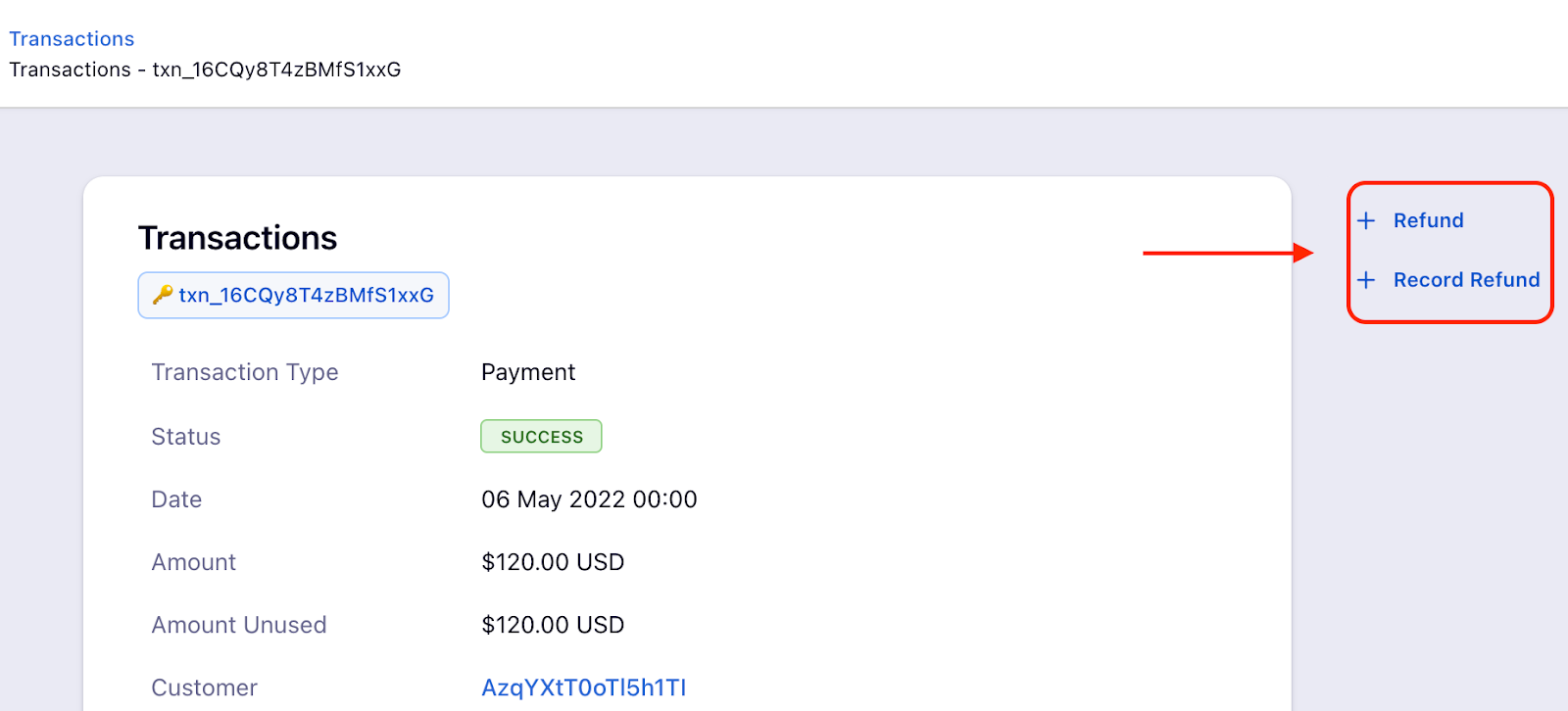
You will be redirected to the transaction page. Here, you will find the option to refund.
image

Note: For online payments, you will get an option to process online refund i.e, Refund and offline refund i.e, Record Refund and for offline payments, you will only have Record Refund.

Once you process a refund, you will see a reference ID for the refund.
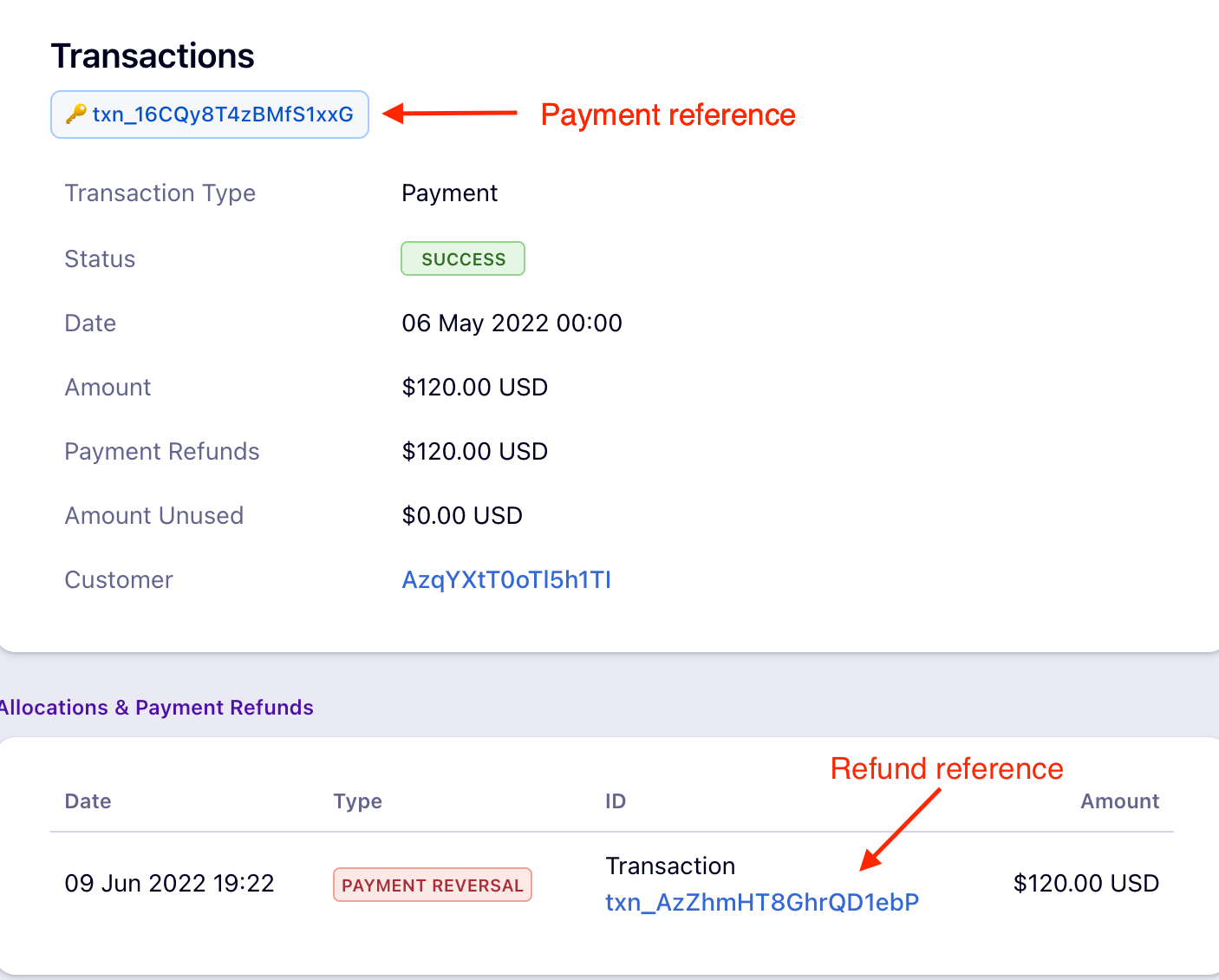
image
image
  1. Via Import an invoice API or Bulk Operation:

You need to import an invoice using API/bulk operation, collect payment for it and then process the refund. In order to restore the deleted invoice, you can achieve this using Import an invoice API or Bulk Operation.

To retrieve the deleted invoice you need the logs of the invoice that was deleted and use the same data to Import an invoice via API. Refer to the article How to restore the deleted invoice?

Was this article helpful?