When Outcome is a Privilege: How AI-era SaaS is Pricing to Prove Value

Outcome-based pricing promises to align revenue with customer success. But what happens when "success" means something different to every user? As AI products blur the line between tool and teammate, SaaS pricing experts share how charging for outcomes requires more than good intentions and what becomes a good proxy.

Quite a few businesses find outcome-based pricing an incredible way to directly attach themselves to customer expectations and an even more impactful way to build a competitive moat. We’ve already seen the disruptions this has created in the market:

– PandaDoc announced outcome-based pricing as a part of its “boldest challenge yet” against DocuSign and Adobe

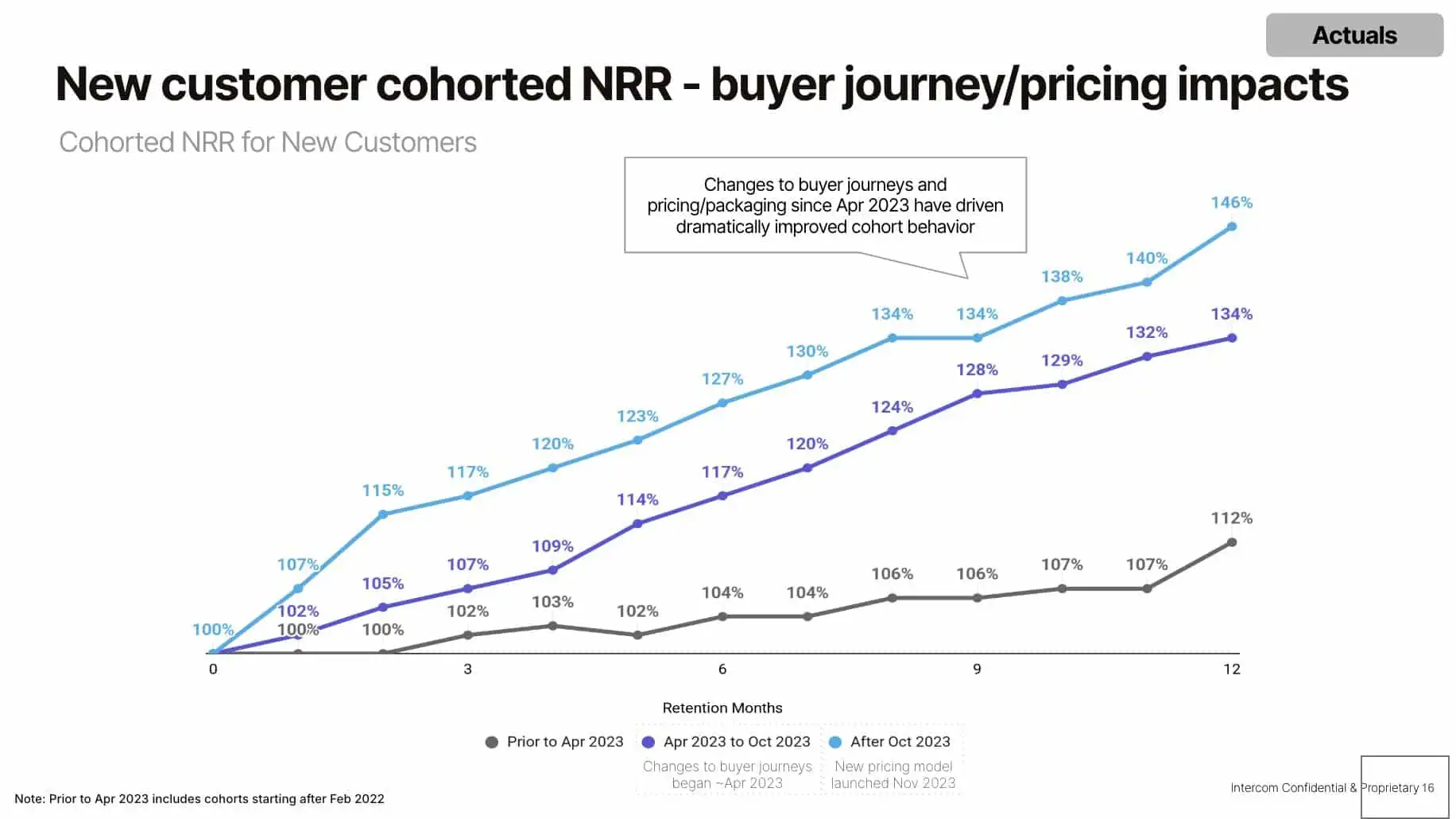
– Eoghan McCabe (CEO, Intercom) publicly professed how the shift to outcome-based pricing helped him reboot “a 15 year old decelerating business to be on course to be the fastest growing large software company in the world…” through the Fin AI agent

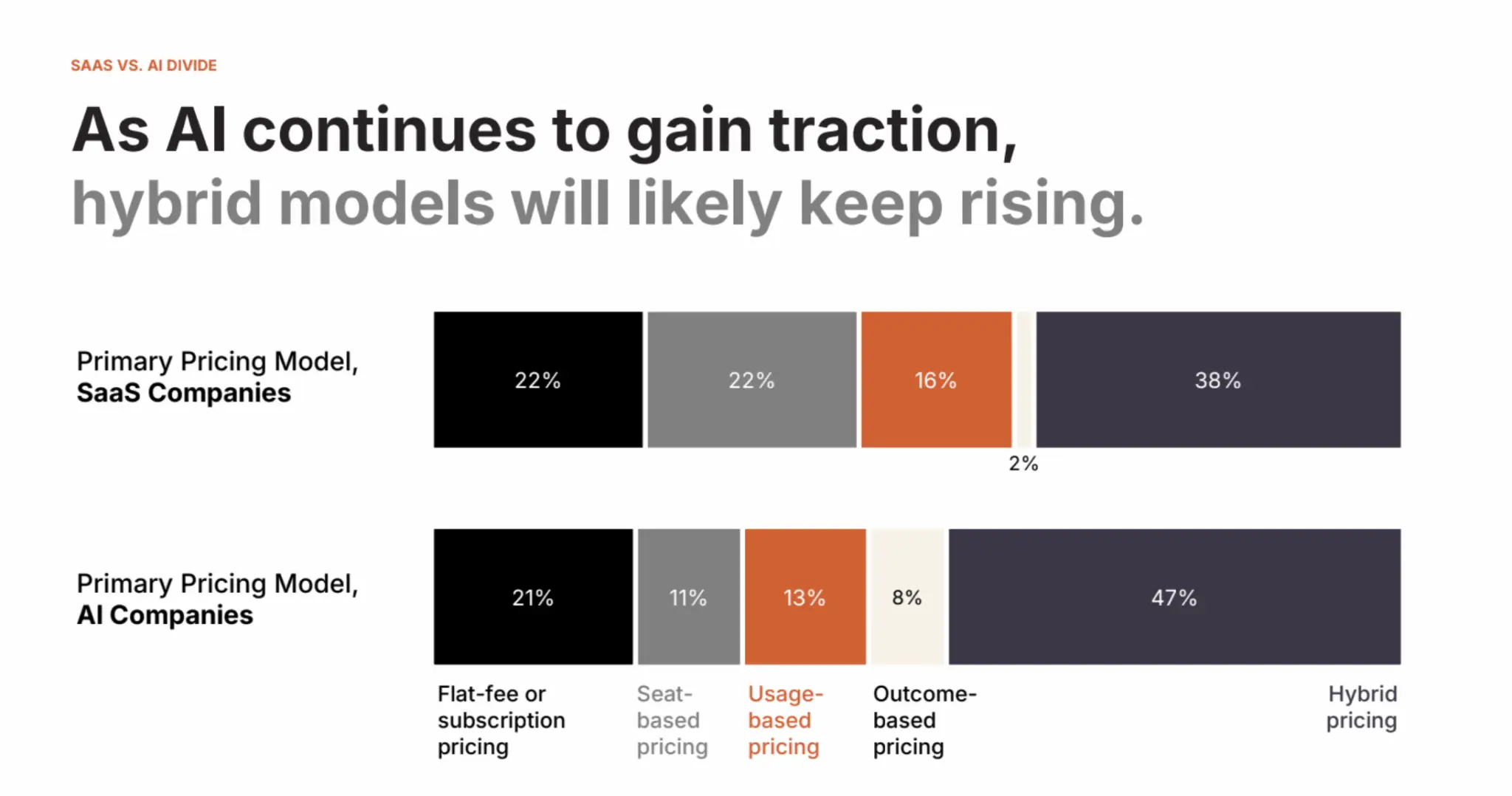
– Kyle Poyar’s study of 240+ software businesses found growing impetus among companies trying to implement outcome-based pricing

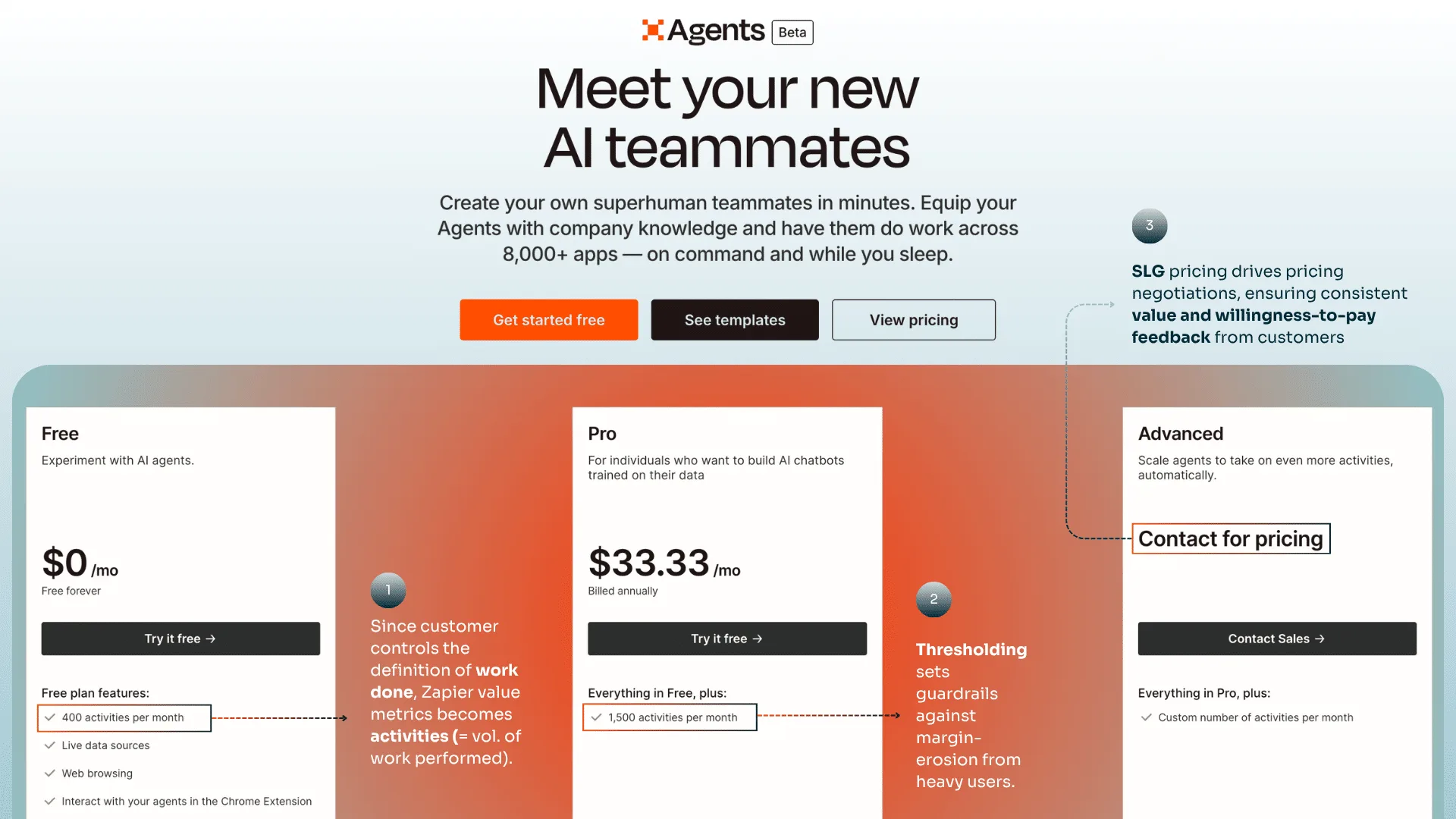
how zapier prices its agent

Yet, even as AI is forcing software businesses to move from ‘delivering efficiency’ to ‘delivering outcomes,’ the nature of AI products is also evolving. Today, in many instances (and even more pertinently with AI agents), the same AI capability can be used subjectively across different teams and workflows, reframing what outcome looks like for each user.

Take Zapier. When it launched its Agent product, the promise was bold: “superhuman teammates” that “do work across 8,000+ apps — on command and while you sleep.”

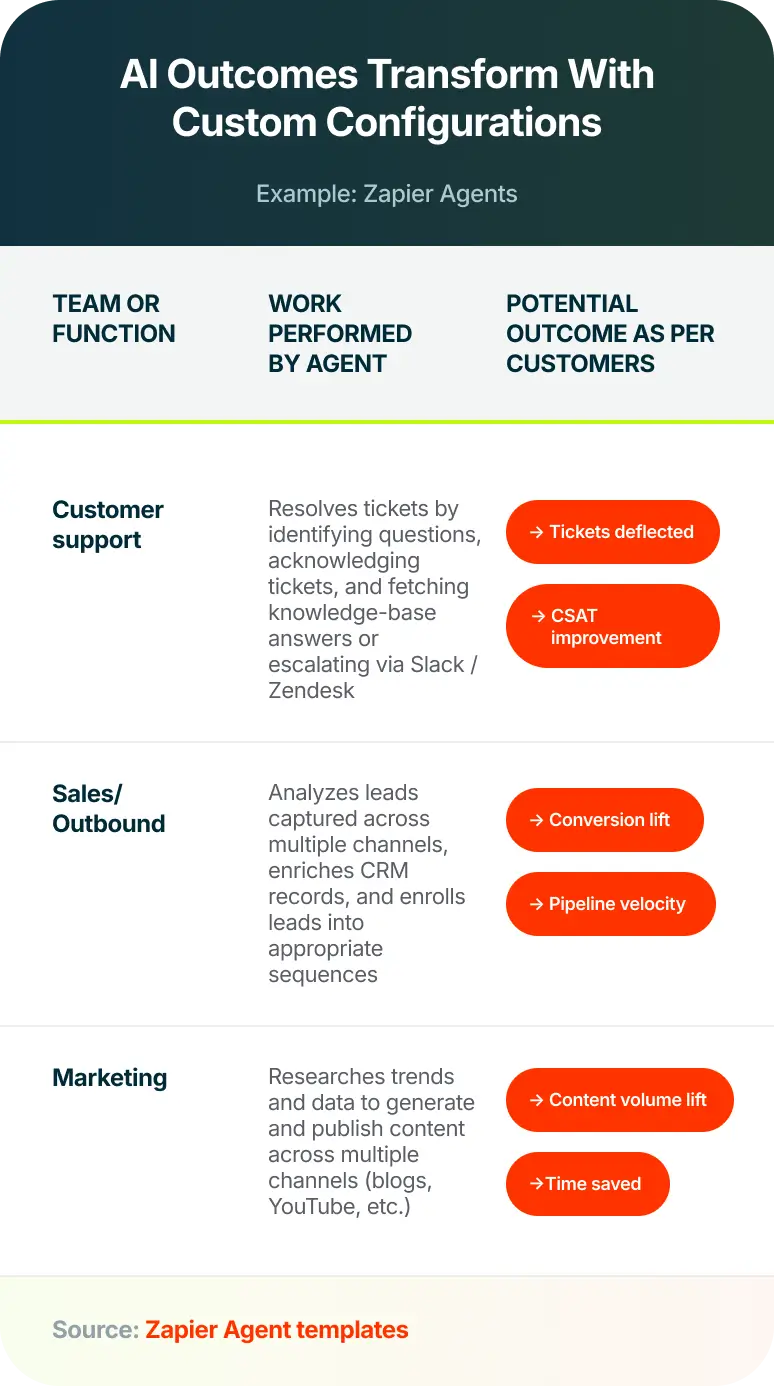
Practically, the value of Zapier Agents depends on how customers define and configure that work, what problems they assign, which systems it touches, and how deeply it’s integrated into their stack. As a result, work done can mean entirely different things to different teams.

This is how AI can quickly become too many things to too many people. And as applicability explodes, so does the number of ways customers define value. Hence, instead of charging against every outcome possible for every team utilizing the Agent, Zapier simply charges for activities per month, and communicates the value delivered as the volume of work it autonomously performs.

how zapier prices its agent

When Chargebee sat down with some of the most renowned pricing leaders from Gong, New Relic, Apple Ads, HubSpot, and others, the same challenges resurfaced. Even without a clear line to communicate outcomes (like Zapier), businesses wanted to make value delivery a core part of their pricing and GTM story.

What are their perspectives on outcome-based pricing? How are they designing pricing to get closer to customers? And, what steps should you take to ensure minimal friction with your buyers? We answer below.

1. The Gravitational Pull: Why Everyone Wants to Price on Outcomes

There are multiple reasons why the ‘pricing by outcomes’ holds, at least in theory:

1. Pricing Control and Alignment

Outcome-based pricing promises precision. Customers pay only for what they actually achieve — not for access, capacity, or guesswork. It projects fairness and flexibility in the same breath: price scales as outcomes do. For procurement departments, that alignment between spend and success feels like the ultimate safeguard against wasted value.

2. Shared Risk and Transparency

In other pricing models, vendors don’t own the responsibility of translating product engagement into value. Even as usage-based pricing offers some degree of control against shelfware expenses, buyers own the responsibility of building the right outcomes out of the product.

Outcome models flip that. When you tie your revenue success to customer success, you gain credibility. Customer’s purchase of the product becomes ‘de-risked’ and as their spends scale in tandem with the value they experience, pricing becomes less a cost center and more a vote of confidence.

3. Outcome Becomes an Acquisition Moat Against Competitors

Outcome-linked pricing reduces buyer hesitation. Paying for results is safer than committing to fixed spend upfront or paying for every instance of usage, especially when the value of AI isn’t proven yet. For buyers, outcomes reframe purchase-decision risk into an opportunity, creating a smoother entry path and faster go-lives.

In markets crowded with per-seat or per-token billing, an outcome-based model reframes the purchase decision: instead of asking buyers to predict usage, it invites them to share in upside. The result is a lower barrier to adoption — because risk feels shared, not transferred.

"The result is that Fin is now a strong 8 figure ARR business that in Q1 grew at an annualized rate of 393%, and we’ll pass $100M ARR with Fin in 2.5 quarters."

- Eoghan McCabe, CEO and Founder, Intercom

In Early Days, Adoption > Monetization

For vendors like Intercom, who can deliver consistently, this model can also become a moat. By anchoring price to measurable success, efficient operators can outcompete slower incumbents who still charge for inputs.

This makes outcome-based pricing feel like the perfect alchemy of fairness, transparency, and control. For buyers, it promises alignment and accountability; for merchants, it unlocks acquisition momentum and signals confidence in value delivered.

Outcome-based pricing worked for Intercom because of the subtle nuances in how Intercom’s customers interact with the product:

Control over outcomes:
Unlike products that provide multivariate outcomes (e.g., Zapier, Agentforce, Relevance AI, etc.), Fin AI performs a single task, delivering a focused outcome (ticket resolutions)
Clear signals of outcome success:
Fin AI’s success (ticket resolutions) are easily defined across customers through fixed parameters (no follow-ups within a period of time, or customers themselves marking a ticket as resolved)
Outcome measurability:
Fin AI’s logs clearly depict every instance of resolution within the product, maintaining a single source of truth for both customers and themselves

2. When Pure Outcome Pricing Breaks Down

But the same qualities that make it compelling in theory often make it fragile in practice. The moment value turns subjective, attribution gets messy, and financial predictability goes out the window. In other words, the dream of “pay only when you win” quickly collides with the reality of defining what winning even means

1. Outcome Definition Fractures Across Customers

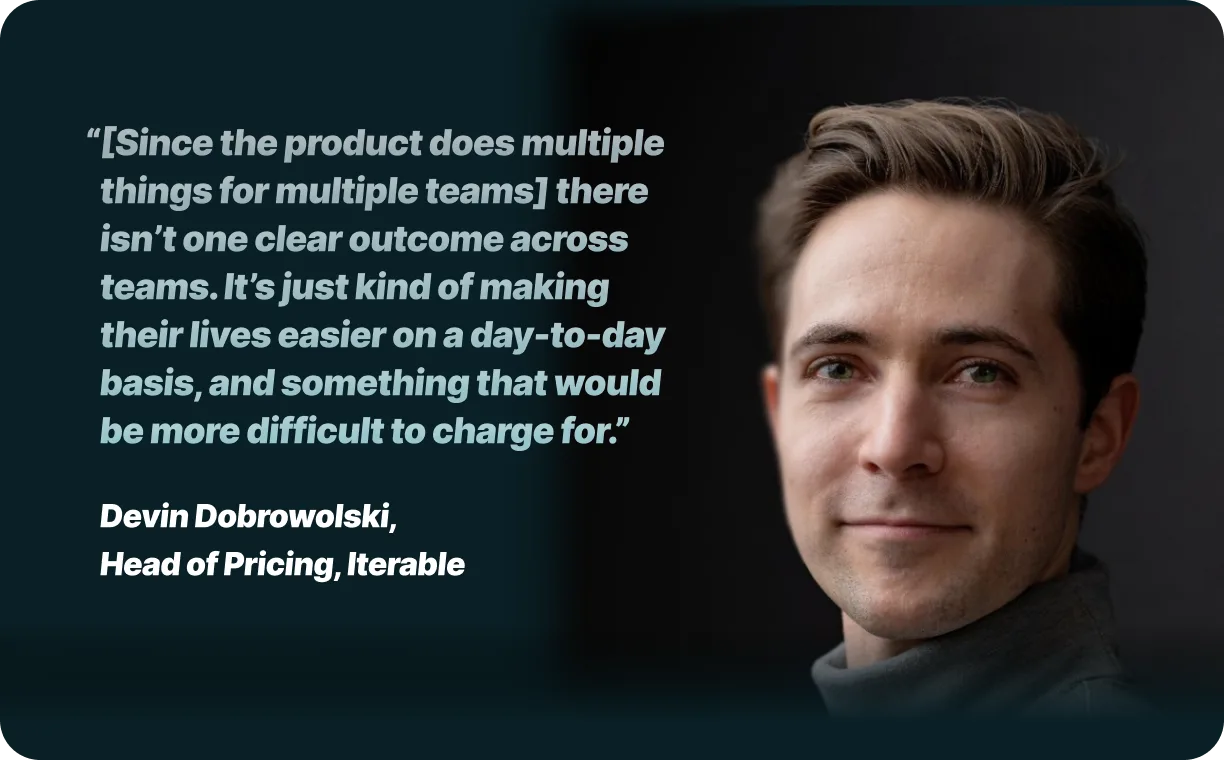
Defining a single “win” becomes the first hurdle. Devin Dobrowolski recalls implementing outcome-based pricing for a contact center technology company:

"It was really clear what the outcome was. Was a bot or an agent able to resolve this customer service inquiry satisfactorily? That’s something that we could measure. And we would get a bounty if it was successful."

Yet, transferring the same logic to Iterable (an AI-powered marketing and customer communication platform), where he currently heads pricing, has proved much more difficult.

Defining outcome gets messier when output is multivariate

Take Devin’s example of Iterable. Iterable delivers AI-powered cross-channel marketing automation. The product touches marketing, lifecycle automation, analytics, and experimentation, none of which produce a single, universally accepted definition of success.

What does winning look like for Iterable’s customers?

– For growth teams, it might be conversion lift

– For marketers, campaign throughput or personalization quality

– For analysts, efficiency in workflow automation

The moment revenue is tied to one metric, it becomes incalculable for others. Especially for new AI products, outcomes are incredibly difficult to define until they’re tested and validated in the market.

2. Attribution Becomes the Achilles Heel for Outcome-based Pricing

Even when a desired outcome is known, proving that your product is what caused it can often become a challenge.

First, even when you can measure outputs in-product (events fired, tasks completed, messages sent), the business outcomes that buyers care about usually live elsewhere ( in Salesforce, Snowflake, Marketo, Zendesk, or an offline spreadsheet). The join between those worlds is rarely clean or real-time, which turns billing on “results” into a game of inference.

Second, there may be external factors impacting the veracity of ‘outcome delivered,’ or how you can track them.

For example, an AI SDR (sales development representative) agent might promise to autonomously engage inbound leads and book/schedule sales meetings for reps, but it can never account for no-shows, last-minute cancellations, or meetings booked by accounts with a poor solution fit.

Even when the outcome is defined as meetings booked, customers can end up challenging the outcome in several ways. For example:

  • No-shows are still logged as meetings booked, leading to ghost charges (i.e., payment for non-delivery of outcome)
  • A customer can manually engage an account, and claim that as a reason for a meeting booked, irrespective of whether it was worked by the SDR agent

That’s where attribution knife fights begin. Sales teams debate which KPI reflects customer value, and customers challenge invoices when results depend on variables outside the vendor’s control.

3. Vendor Predictability Erodes as the Cost to Deliver an Outcome Swings

Where buyers fear cost predictability, merchants face a corollary in revenue uncertainty. Two customers may achieve identical outcomes, but the expense of enabling those outcomes can vary by orders of magnitude depending on how the product is integrated, configured, or consumed.

In enterprise integrations, the variability widens further with:

Integration depth:
How tightly your product connects to the customer’s systems. For example, a shallow integration that plugs directly into Zendesk APIs is inexpensive, while a deep integration that syncs across multiple CRMs, knowledge bases, and internal tools requires custom middleware and ongoing maintenance
Data quality:
The reliability and cleanliness of customer data feeding your models. Poorly structured or outdated data forces repeated inference cycles, retries, and validation steps to maintain accuracy, inflating your compute costs for the same output
Usage intensity:
How heavily your AI product/agent is exercised for each run. Two AI SDR agents may generate the same number of meetings booked, but may have worked on inbound leads datasets of different sizes, resulting in different costs

This makes ‘per outcome’ pricing a dangerous simplification. It equalizes value delivered but masks the vendor’s unit economics risk.

3. How To Price AI Closer To Value When Outcomes Aren’t Inherently Clear

Many teams chase outcome-based pricing because it feels like the ultimate proof of value; the cleanest way to say: ‘we win when you win.’ But in practice, the real goal isn’t to bill for outcomes; it’s to demonstrate that the product creates them.

That’s why even when ‘outcome’ isn’t always the metric, it becomes the message. It’s the story you want pricing to tell by connecting spend to success, even if the actual meter runs on something more controllable.

In other words, pricing doesn’t have to capture outcomes to prove them. Here’s how operators are achieving that balance:

Many teams chase outcome-based pricing because it feels like the ultimate proof of value; the cleanest way to say: ‘we win when you win.’ But in practice, the real goal isn’t to bill for outcomes; it’s to demonstrate that the product creates them.

That’s why even when ‘outcome’ isn’t always the metric, it becomes the message. It’s the story you want pricing to tell by connecting spend to success, even if the actual meter runs on something more controllable.

In other words, pricing doesn’t have to capture outcomes to prove them. Here’s how operators are achieving that balance:

1. Bill on Near Proxies You Control

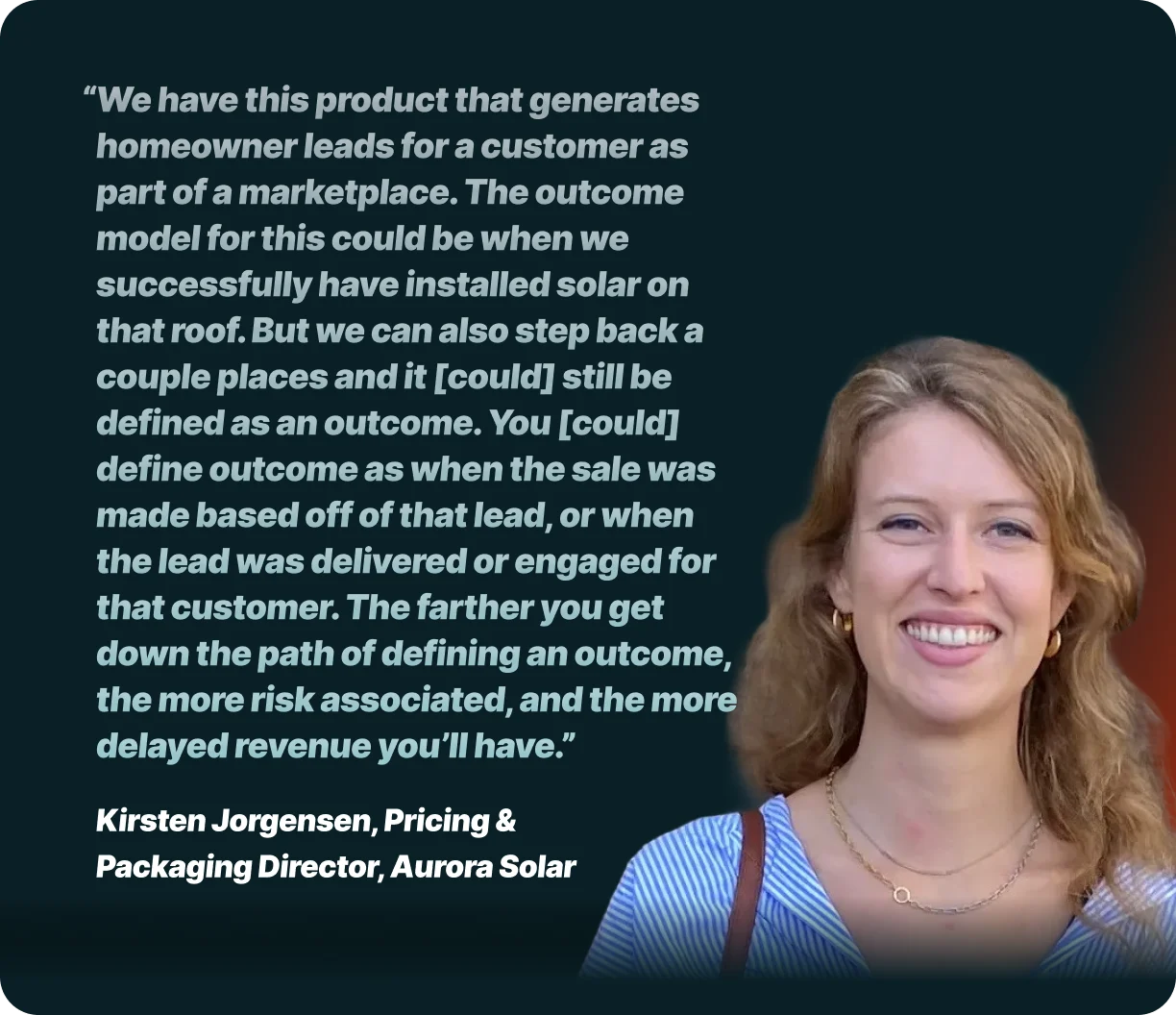
The farther your pricing metric drifts from the moment your product directly creates value, the less control you have over customers’ acceptance of it.

While the pricing math can differ for every company, anchoring your metric closer to your AI output helps you tell a clearer resolution story.

Case Study: One of the best examples of this balance is Decagon, a Forbes Top 50 AI company that operates in the customer experience segment (alongside Intercom) but positions itself as a “conversational AI platform.”
Agent Operating Procedures (AOPs) help its customers build complex multi-step workflows with code-based configurations. Since these custom configurations are owned and managed by the customers based on their specific technical needs, charging on a straightforward ‘per-outcome’ basis can generate huge margin risks for Decagon.
Instead, Decagon’s pricing cleverly bridges outcome appeal with usage control through two choices:
Per-conversation pricing: a predictable, usage-based model that charges a fixed rate for every incoming conversation.
Per-resolution pricing: a success-linked option where Decagon charges a higher fixed rate only when the AI agent fully resolves an issue, with no charge for escalations.
On the surface, resolution still remains as an option (but at a premium to reduce risks). In practice, per-conversation pricing becomes the cleaner, more reliable proxy in their own words.
“By focusing on conversation volume rather than overly parsing the definition of “outcome,” the incentives are clean. We’re not incentivized to push partial resolutions or sidestep tough cases. Instead, we can pour energy into what really matters: getting your customers the right answers and increasing your resolution rates and customer satisfaction. You’ll get into situations where a user is upset, leaves, and that gets counted as a resolution. You never want to be in a situation where you’re arguing over what a “resolution” is.”

- Bihan Jiang, Director of Product, Decagon

“Decagon gets to ‘communicate’ success-based pricing. But then they get to ‘sell’ (mostly) work-based pricing instead… You want the customer to get a fantastic outcome — and you want them to recognize that your product powered that outcome. As soon as you start charging for success, the customer begins to rethink the results.”

- Kyle Poyar, Founder & Creator, Growth Unhinged

2. Run Pricing Alignment Through a Sales-led POC

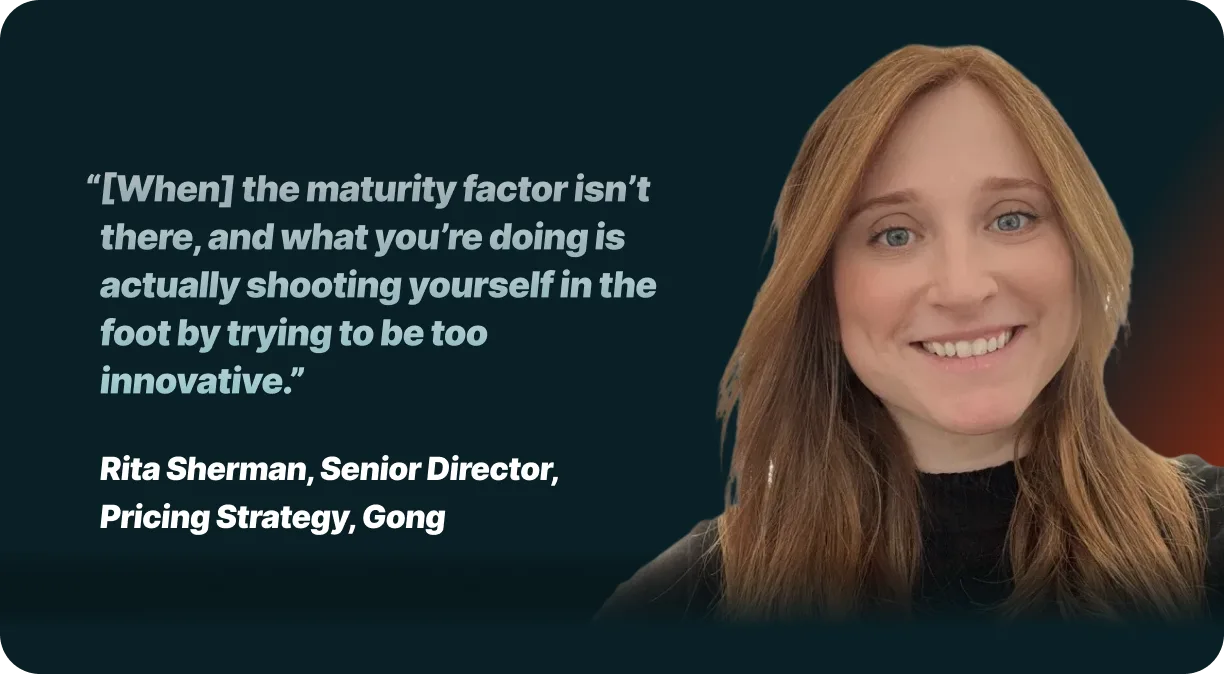
For SaaS businesses like Gong, a sudden switch over to a new pricing metric can do more harm than good.

Gong sells its packages consultatively, and that’s the key. Every deal begins with a deep discovery call led by the AE, where pricing isn’t just a number but the conclusion of a value conversation.

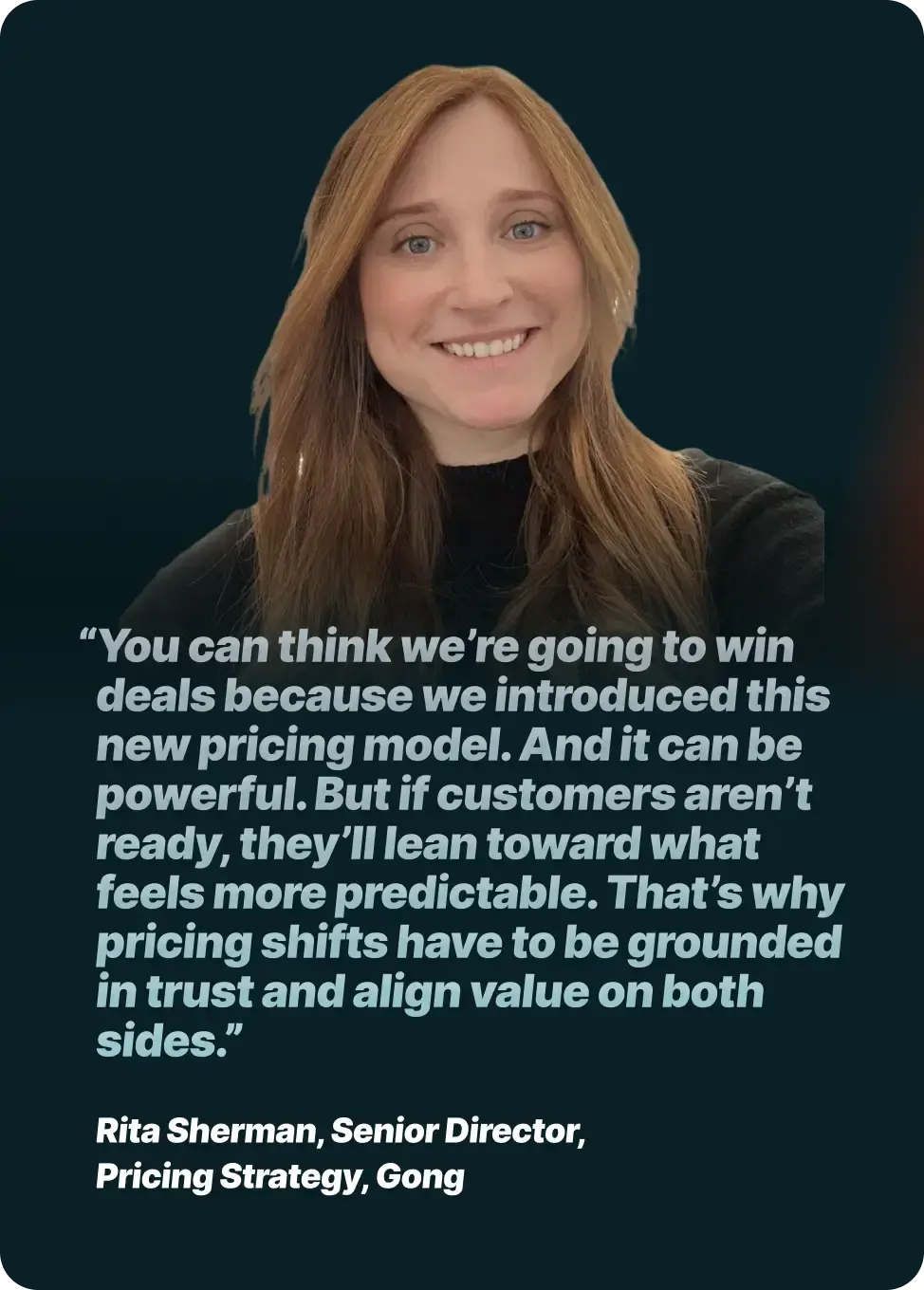
“So based on what the customer is saying, we think that these are the right solutions for you, and it gets to a point where you’ve got customer alignment before you even bring up pricing.”

Just like Gong, 94% of the Forbes top 50 AI companies have some sort of assisted-sales motion. It is not always because their products are complex, it is sometimes because their pricing stories are.

Especially when your value metric is new, technical, or abstract, the sales team becomes the translation layer between your internal logic and the buyer’s mental model of value. For SaaS companies launching AI products, especially, this does three things:

1. De-risks the value metric:
Instead of jumping to price based on self-defined outcomes and then defending them against customer challenges, sales-negotiated flows try to figure out what value means to the customer before you start charging them
2. Bridges value perception:
AEs can tailor how pricing is framed, tying a technical metric back to a customer’s operational or financial gains
3. Improves win rate and retention:
Buyers are more likely to accept and renew when they agree on what they’re paying for and why

3. Make Value Visible or Apparent

Even when customers agree on the pricing metric, they still need to see the value behind it. The credibility of any metric fades fast if customers can’t track how it grows with their outcomes.

That’s why leading pricing teams are investing not just in the math of monetization, but in the infrastructure of visibility.

The strongest operators treat outcome measurement as a habit, not a model. They set baselines, build in-product dashboards, and run customer feedback loops to mutually validate value before turning those signals into billable metrics.

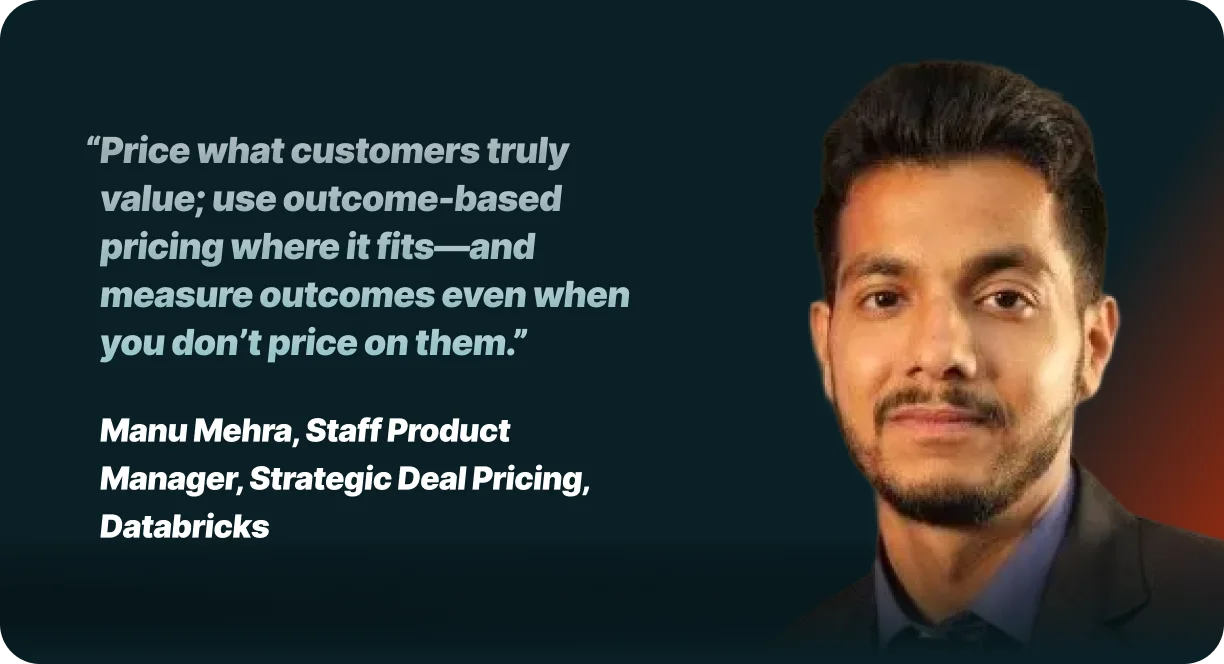
But value visibility doesn’t stop at reporting. It extends into every revenue touchpoint. As Manu noted: “invest in enablement for sales: clear catalogs, standardized calculators and proposals, and ongoing training.” That’s because making value visible starts inside the company, with teams that can articulate how every line item on an invoice connects back to impact.

Pricing transparency and consistent enablement don’t just smooth negotiations; they build trust capital, the currency that sustains pricing power over time.

Today, implementing outcome-based pricing remains aspirational for many. While it promises the perfect alignment between product costs and customer benefits, an AI solution’s multithreadability—its ability to power multiple workflows and outcomes, thereby generating variable costs across every usage path—makes that promise harder to hold.

The strongest operators don’t try to force outcomes into a pricing model where they don’t belong. Instead, they treat outcome exploration as a shared journey with the customer, starting with metrics that demonstrate product value rather than challenging the customer’s definition of a business result. These controllable, provable, and sustainable metrics let pricing behave like outcome-based pricing in spirit, without the fragility of its execution.

"Truly understanding where your customers are deriving value in your product and what those outcomes are will unlock all sorts of flexibility when it comes to pricing, even if you never get all the way to the point of fully outcome-based pricing."

- Joey Quirk, Head of Monetization & Technical GTM Advisory, Chargebee

This requires more than testing multiple metrics and price points. But doing this well takes more than testing metrics or price points. It requires a GTM organization fluent in how customers define success, equipped with a clear signal that quantifies it, and disciplined in maintaining a feedback loop that evolves with both. When those pieces click, pricing earns the one thing that spreadsheets can’t model: trust.

If you’re exploring value-based pricing or wondering how to operationalize it, our pricing experts at Chargebee would love to help you get started.

Ready to scale your pricing strategy like pros?
See how AI leaders use Chargebee to automate complex billing and focus on innovation.

And if you’ve already charted your own path to pricing closer to value, I’d love to trade perspectives. Feel free to reach out on LinkedIn.

About the Author

Arijit Bose is a Product Marketing Manager at Chargebee, the leading Revenue Growth Management platform that helps SaaS and AI companies design, launch, and scale flexible pricing models—across subscriptions, usage-based, hybrid, and enterprise-led monetization—while managing billing, invoicing, and revenue recognition end to end.

At Chargebee, Arijit leads key initiatives around usage-based pricing and AI monetization, and is the author of Chargebee’s definitive book on usage-based pricing. With bylines in Reuters and G2, he brings journalistic precision to understanding how pricing and monetization are transforming—and being transformed by—companies building for the AI era.